
Memory Lane
through the lens of pencils

You can only write with pencils on the third floor of the Provincial Archives. I am told this by the grey haired woman at security. She looks at me through her glasses in a pitying, sour way, wondering how I don’t know this. And no bags or water bottles or food either, she adds, just a laptop, paper, and a pencil. This was after she asked for my card. I say I haven’t been to the archives in thirty years, not since I was in university.
Thirty years ago I was living in my parents’ home, a twenty minute walk on the other side of campus. I was writing a fourth year history paper for a 19th Century English history seminar on how London parks were designed in part to help shape, gentrify, and control the leisure time of the working classes. We have a Victorian park here in Halifax, the Public Gardens, one that I assumed followed a similar ethos to those in the mother country, so I spent a morning at the archives. Up on the third floor I found examples of how we too used park etiquette to control the unruly, right up to the present day. The best find was a local newspaper clipping from the late 1960’s with an image of long-haired hippies frolicking on the grass of our local public gardens beside a ‘keep off the grass’ sign.
I don’t tell the security guard all of this, how history was more interesting to me when human stories were involved, especially the naughty ones, but I tell her my maiden name, Lindsay Cameron, and my address at that time. She scrolls through her database then coughs up “you’re here.” She softens slightly as she writes my name on a name-tag, then with the nod of her chin directs me to the lockers. I pack away my winter wardrobe, my water bottle and my pens and arrive on the third floor with just a notebook, a pencil and a name tag. I am 21 again.1
Twenty-one was an analogue time, but I didn’t know it then. I cooked in my mother’s kitchen from cookbooks or recipes I had copied into my hard-backed recipe journal, a gift from my mom for my twenty-first birthday. I read books, rode my bicycle to class, watched Melrose Place on the sectional sofa with my sisters and talked on the land-line at the top of the basement stairs.
Lately I’ve been plugging my phone into a charger in the kitchen at night and leaving it there until I make coffee in the morning. This feels like a freeing, radical act, like I’m a hippy rolling around on the grass at the Public Gardens. This act of defiance, this attempt to break the insidious addiction to tech, means I’ve been reading more. Putting away my clothes while the bath runs. Talking to my husband, talking to my son, talking to the dog. I still wake in the middle of the night (the plight of my age group) but instead of lighting up my phone, I turn on a little light and sneak a few paragraphs of my book. Eventually, I get sleepy again. The rhythm feels good, like I’ve captured something lost. I’m not 21 again, but I feel her curiosity and the spaciousness of time.
My pencil today is a yellow HB, one that I keep in an old leather pencil case. HB stands for the weight and tone of the lead - not too hard, not too black, just right in the middle. There is a jar of similar pencils on the 3rd floor Public Archive reception desk for anyone who doesn’t have a pencil of their own. I am directed to a bank of computers where I will start my search - the history of the house we live in for a project I am working on, one that I hope will stand taller when I understand the foundation beneath my feet. I write notes in my journal, feeling the familiar scratch of pencil on paper, finding my hand in the loops and lines of letters on the page. My neighbour gets up and breaks the silence with the screech of the eclectic sharpener fastened to the end of the table. Sharp pencils are important.
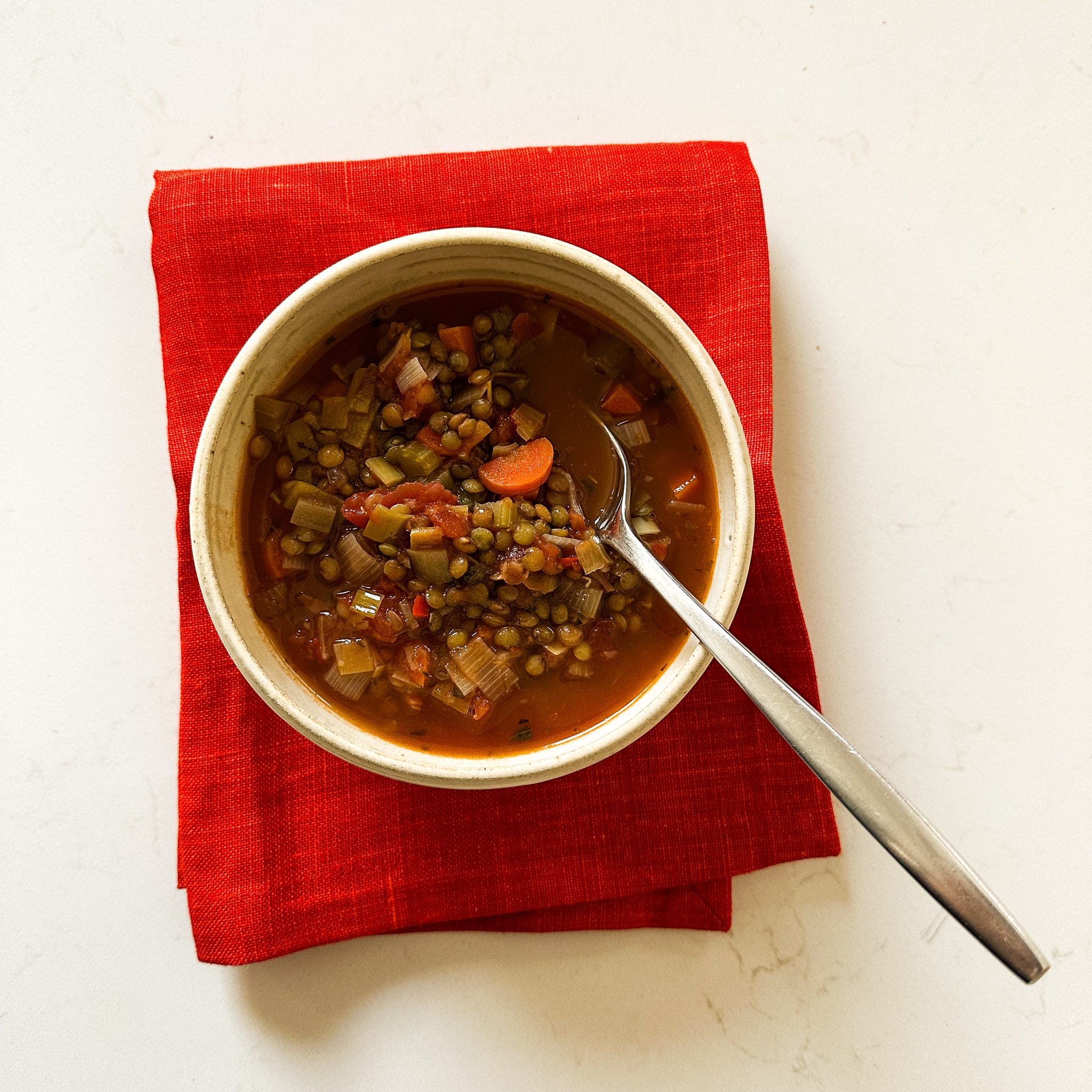
At the end of the afternoon there’s still more to uncover, but I have to get home. This much I know: our home was built in 1874, according to the street registry at the time, and was first owned by a Mr. William Duffus. His brother James lives next door. The granite foundation is still there as are the dormer windows, the banister, mantles, floorboards and woodwork carved like waves that lap along the trim of the stairs. Above the front door is a small number plate covered with layers of paint obscuring the original three-digit house number. The kitchen used to be the dining room. I keep my cookbooks on a shelf in the kitchen that was once a small doorway into the hallway. On the shelf is the hardback recipe journal, the gift from my mom when I was twenty-one. Inside that book is a recipe for my cousin Betsy’s lentil soup, scratched up with pencil marks from years of making this soup. There are notes like “sliced pancetta optional, added with the carrots and celery”, and “rub the oregano between your fingers to activate its flavours” or “finish the soup with a drizzle of good olive oil, if you have it”.
I make lentil soup that afternoon in the kitchen that used to be Mr. W. Duffus’s dining room. The south facing sun shines through the tall windows; icicles drip from the eaves above. My phone charger dangles from the plug beside the coffee maker, next to a jar of pencils.
Beautiful, Lindsay.
And don't you think the old handwritten recipe books are the best? A record of society at the time - let alone the handwriting which sings its own little melody.
Love this Lindsay.. i treasure my hard cover budget book that mum hand wrote all my favourite recipes growing up.. and gave me when I was first married..pages stiff from melted butter. My kids who printed in the margins..
Every recipe, beautiful penmanship, brings me back to me as a teen in mums kitchen